
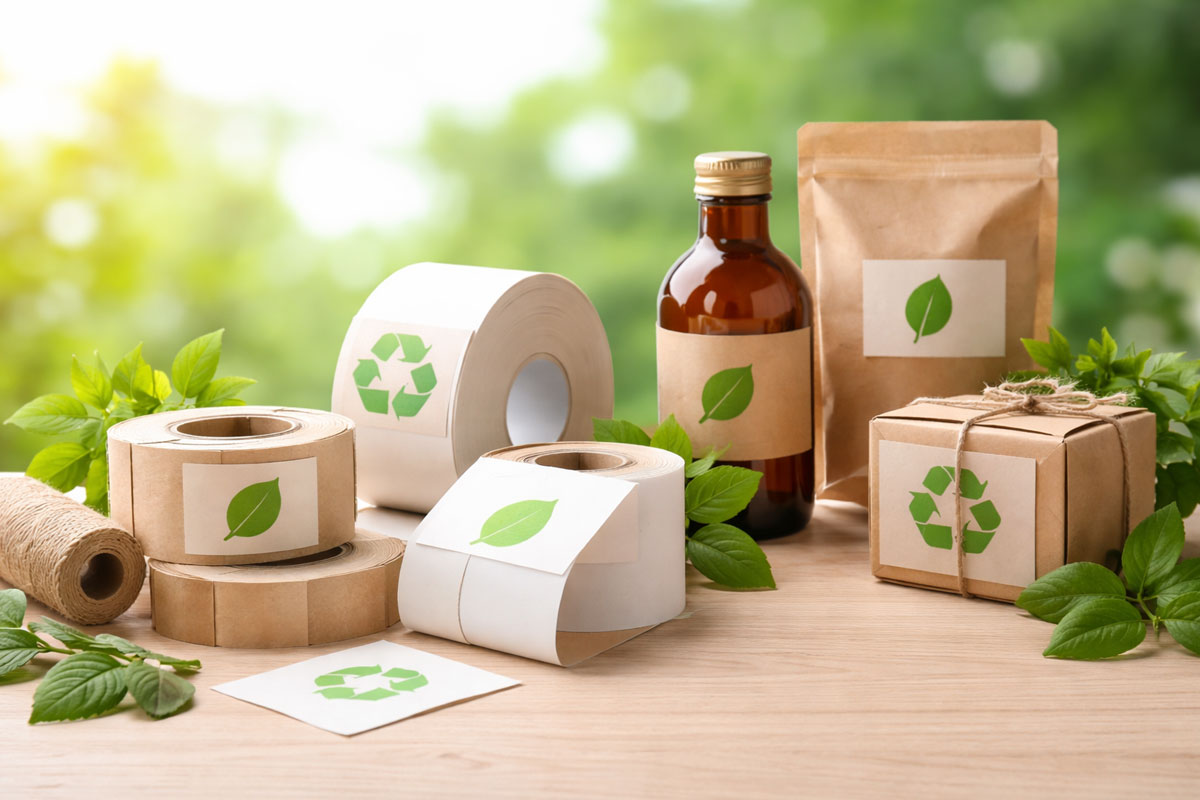
Are your labels hurting the planet—or helping it? Transitioning to sustainable labeling, including the label stock and adhesives you choose, can strengthen your brand and appeal to environmentally conscious consumers. CapitalOne Shopping reports that the “eco-friendly” market is growing 173% faster than conventional retail. Even more interesting is that 80% of U.S. consumers are willing to spend more on environmentally friendly products. That commitment extends beyond products to packaging and labels, with nearly two-thirds of Gen Z shoppers saying they want to support eco-friendly labeling practices.
Key Components of Sustainable Labeling
Choosing the right labeling approach involves more than picking a design. Materials, printing methods, and adhesives all impact sustainability. Every choice is an opportunity to cut waste, reduce energy use, and protect the environment.
Choose Eco-Friendly Label Materials
Label materials have a major impact on the environment, particularly if you label thousands—or millions—of products each year. Choose labels with recycled face stock in addition to inks and adhesives free from chemicals that don’t harm human health and the environment. Manufacturers like Avery Dennison are innovating with low-impact processes that use minimal raw materials and energy, making sustainable labeling easier for brands.
Decrease Labeling Waste
Another way to operate more sustainably is to choose linerless labels—labels with no backing. With linerless labels, operations have less waste to dispose of. They also get the added benefits of less clutter on the floor and in workspaces and less storage space required for rolls that contain more labels. A great example is the eezeetag® system for baggage tagging in airports. In this self-tagging system, labels exit the printer with no backing, ready to apply, so airline passengers just tag their bags without adding to the volume of waste going to the landfill.
Label waste isn’t only related to the backing on standard labels, though. Companies that preprint labels often face shelves full of obsolete labels that they have no choice but to throw out. On-demand printing is a more sustainable labeling solution, allowing brands to print labels as necessary, with the latest requirements and product information.
Use Energy-Efficient Printers
Brands that print labels in-house should evaluate the printers they use for energy efficiency. Sustainable label printing requires devices that are certified by ENERGY STAR or EPEAT, indicating that they reduce energy consumption and carbon emissions.
Another step brands can take toward more sustainable label printing is to learn about printer design. For example, Epson ColorWorks Inkjet printers use PrecisionCore Heat-Free technology, which doesn’t require heating ribbons or fusers during processes. Epson also offers a line of cartridge-free printers that reduce plastic going to landfills. Choosing long-lasting printers with replaceable parts also minimizes environmental impact.
Select Safe and Sustainable Adhesives
Safe adhesives that don’t use harmful chemicals are essential to an eco-friendly labeling approach. The right adhesive also improves recyclability—labels that can be easily removed from glass, metal, or plastic containers allow products to be recycled rather than landfilled. Considering a label’s entire lifecycle ensures truly eco-friendly packaging.
5 Benefits of Transitioning to Sustainable Labeling
When brands transition to more environmentally responsible labeling practices, they’ll find it has several benefits for their businesses, from enhancing their reputation to improving the bottom line. The advantages include:
- Cost Savings
Upgrading to new labeling materials or printers may require an expense, but they often save money over time. Many of the same principles of sustainability equal cost control, like lower energy bills, reuse vs. replacement, and less waste and disposal costs. Evaluating total cost of ownership (TCO) will reveal the potential for cost savings. - Regulatory Compliance
Sustainable labeling often aligns with label regulations, like FDA standards for safe food labeling, and California Prop 65, which raises awareness of chemicals known to cause cancer or reproductive issues. Label adhesives, plastic coatings, and inks must be compliant with these regulations, and compliant choices are usually more sustainable ones. - Stronger Customer Loyalty
When a brand advocates for the same values that the consumers in its market have, it can build more loyalty and, as a result, build more customer lifetime value. - Positive Brand Story
In a crowded market, brands need to find ways to stand out. A commitment to sustainability (and creative messaging that lets consumers know about it) can help a business differentiate itself. A business that cares so much about the environment that it deliberately chooses retail labeling to protect the earth may be one that consumers want to learn more about. - Ethical Considerations
For many brands, sustainable labeling is one way to contribute to broader environmental goals and make more responsible choices over time.
How to Get Started with Sustainable Labeling
You have both eco-friendly and traditional labels and printers to choose from, but the best choice for the planet and your business may not immediately be clear. Our experienced team can help you make the best decisions about eco-friendly labeling and more efficient operations. Contact us for a free consultation!