
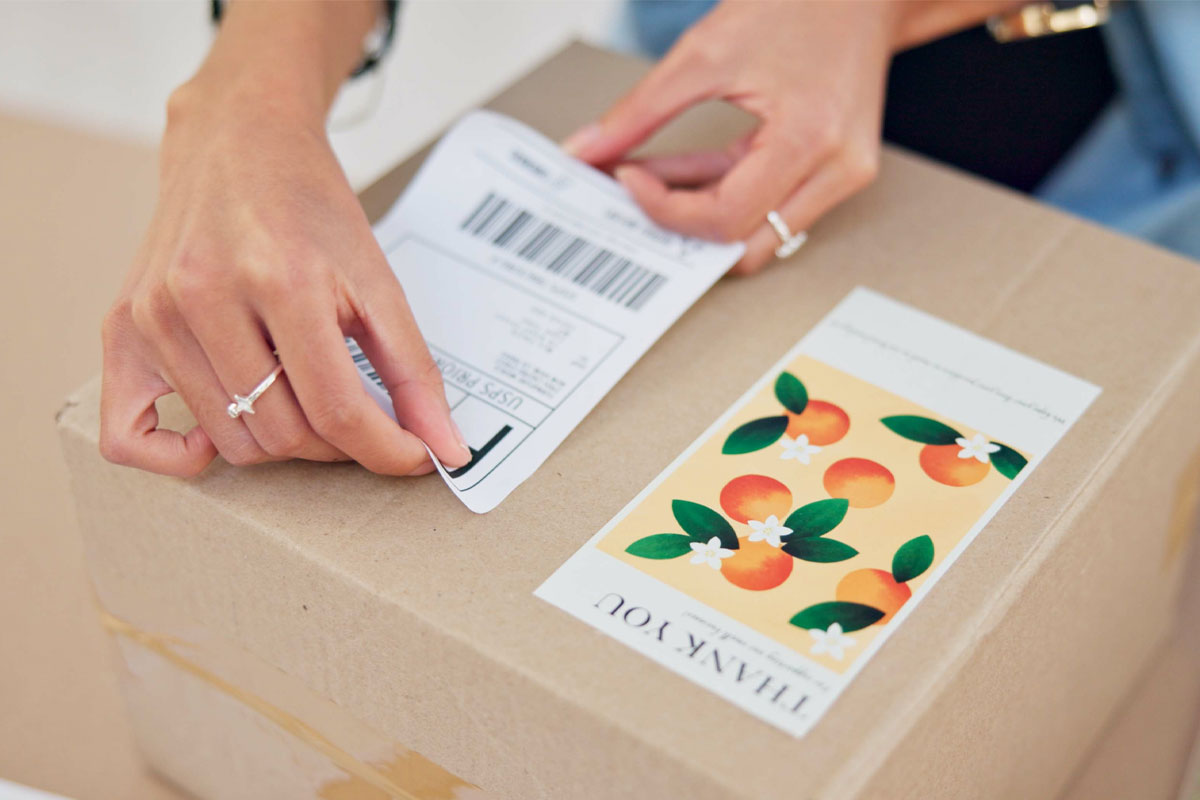
Different Environments Require Different Label Stock
One of the biggest factors in the type of label material you should choose for your application is the environment in which you’ll use it. The key is to select a label that will perform over its intended lifetime, using the most cost-effective printing technologies. Factors to consider include:
- Surface: Where you apply the label matters. Different types of labels work better on metal versus glass or cardboard. Also, consider the shape of the item (flat or curved) and whether the surface is smooth or rough.
- Cleanliness: Applying a label to a dirty or rusty surface is a challenge. The label could stick to the dust or debris but not the item itself. A durable tag may be a better choice for this type of application.
- Temperature: Consider both the temperature of the item when you apply the label and environmental temperature extremes when the item and label are in use.
- Service Conditions: For labels in harsh environments, choose label material that can stand up to moisture, immersion in liquid, UV exposure, chemicals, and abrasion.
What Types of Label Stock Are Available?
You will find a wide array of label options with a range of features, sizes, and formats. To narrow your choices, begin with labels that are compatible with your printer technology. Manufacturers develop label stock for specific printing methods to ensure the best results. Focus on options for your print technology, e.g., inkjet, laser, thermal transfer, or direct thermal.
You also need to consider the label finish. Matte, gloss, high-gloss, and clear finishes impact the look of the label and your brand. However, they are also a factor in readability and barcode scannability.
Another consideration is label liner material. Base this decision on whether your team will apply labels by hand or use a label applicator. Paper liners are a cost-effective choice for manual label applications. However, PET liners, made from a type of polypropylene, are stronger, thinner, and a better choice for automated processes than paper.
Durable Labels
If labels required for your use case must stand up to harsh conditions, the label stock must be durable. It isn’t practical or cost-effective to continually replace damaged labels intended for long-term use, like warehouse floor labels or asset labels. Furthermore, if labels required by OSHA, BS5609, or other regulations fade or become unreadable, your company will be out of compliance and possibly face fines or legal action.
Paper labels are a good choice for dry, indoor use. However, a variety of film stock is available for labels that need to stand up to moisture, temperature extremes, chemicals, harsh cleaners, and wear. Match the label stock to your needs, for example:
- BOPP (biaxially oriented polypropylene) is film stock that the manufacturer stretched in two directions, making it strong and durable. It is also an excellent choice for moisture resistance.
- PET (polyethylene terephthalate) is a type of polyester that’s highly durable, stable, and chemical resistant.
- Vinyl stock is flexible and durable for irregular surfaces and harsh environments.
Pinpointing the label stock for your application that will deliver the best performance most cost-effectively is often a challenge. Working with a provider with labeling expertise and knowledge of your industry will save time and give you the best results.
Keys to Choosing the Right Label Adhesive
The material you choose for the face of the label is critical to performance, but the adhesive is equally, if not more important. Labels have no value if they do not stay in place. Types of label adhesive available include:
- Permanent: Use these adhesive labels that you will not remove. Permanent adhesive is a good choice for labeling glass and metal items.
- Removable: If you need labels to peel away without leaving residue, for example, on a reusable container, choose this type of adhesive.
- Freezer-grade: This type of adhesive will keep labels in place in cold or frozen environments.
- High-tack: Consider this adhesive for shampoo bottles, milk jugs, or other rough surfaces exposed to harsh use.
- Repositionable: Labels with this adhesive let you adjust the label before it sets.
- FDA-Approved: Labeling food contact surfaces requires an adhesive that keeps groceries, baked goods, and other foods, based on FDA regulations.
Again, take manual vs. automated label application into account. Automated systems require different adhesive release, which will affect the ease of dispensing and the quality of the label that results.
With the choice of label adhesive so critical to performance, the smart strategy is to work with an experienced label provider who can help you find the optimal combination of label adhesive and stock.
How Will a Label Provider Determine What’s Right for My Industry?
A provider that takes a consultative approach to finding the right label stock and label adhesive for your application will factor in the purpose of the label, the environment, and industry and regulatory requirements. Then, your provider will look at available options to make the best match. For example:
- Food and beverage labels must stand up to refrigeration, moisture, and possibly oils while meeting FDA requirements for food contact surfaces.
- Pharma and healthcare labels are often small, used on bottles or medical devices, and must be scannable and durable. They may require tamper-evident features or compliance with USP or FDA standards.
- Retail and eCommerce labels must be durable enough for fulfillment processes, have sharp images for scannability, but be the most cost-effective option for a large volume of items.
- Logistics and shipping labels should be compatible with thermal printing and deliver excellent performance in all weather conditions and through continual handling.
- Chemical and GHS labels must meet all regulatory requirements and withstand exposure to harsh substances and environments.
Before You Commit to a Label Stock and Label Adhesive
One of the most important steps you can take to ensure success with labeling is to test your label adhesive and stock combination. Gateway is happy to provide samples so you can confirm in real-world conditions that the label material you chose is the right one for your application.
And remember, Gateway is here to help. Contact us for a free consultation to discuss your application and determine the best solution for your business.